Growth, creativity and trust: B2B reflections from Cannes Lions 2026

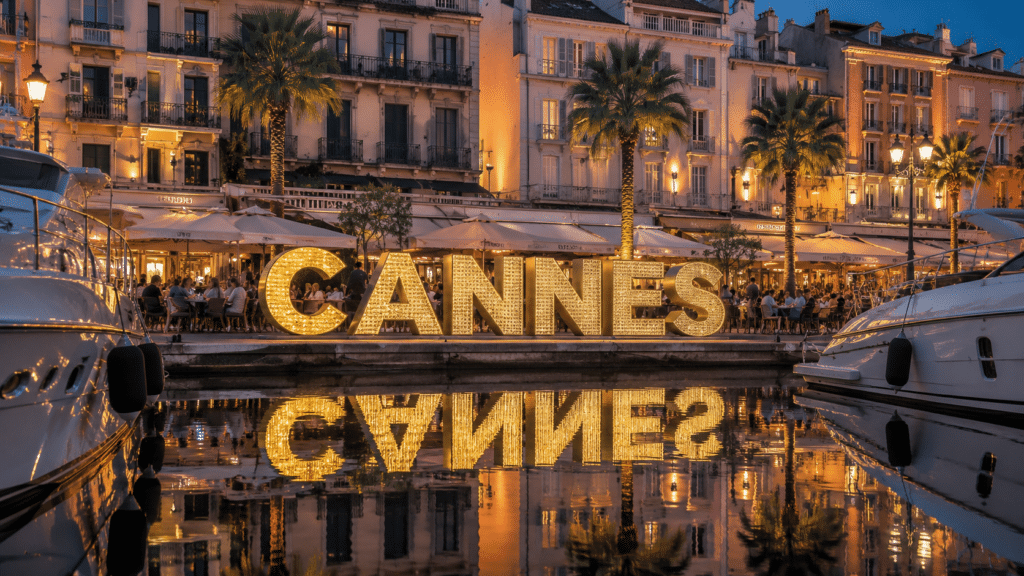
Five days, dozens of stages and an ocean of LinkedIn posts. I waited for the dust to settle, then sat down with Fiona McKenzie of Marketbridge to discuss out what Cannes Lions 2026 actually said about B2B – and it wasn’t quite the story the noise was telling.
Cannes is overwhelming. Anyone who has been will tell you as much, and anyone who followed it from a desk this year will have felt the second wave: the flood of reflections, hot takes and highlight reels that lands the moment the festival ends. We are all creators now, and quite rightly so. But it makes the signal genuinely hard to find. Fiona, there for the first time, described watching it unfold online as much as on the Croisette: “you’re seeing a lot of your network post their reflections, their views on the talking points, and it is a lot to navigate. And it’s also just a bit confusing what it’s all about.” That confusion is precisely why we held back before recording the episode of The Trust & Influence in B2B podcast, on which this article is based.
It helps to remember what Cannes Lions actually is. Not one conference but many related experiences, layered on top of each other: the core programme in the Palais, the big-tech installations lining the beachfront, and behind them an ever-expanding fringe of hotels, restaurants and brand takeovers. If you’re looking for a comparison, it’s somewhere between the Edinburgh Festival and Davos. Structurally, that means there is a formal centre of gravity surrounded by increasingly anarchic activity that no single organiser controls. For a newcomer, simply locating the real B2B conversations is a physical challenge, and Fiona clocked 18,000 steps on the first day alone.
B2B on the rise, seen through a growth lens
The effort is worth it, because B2B is unmistakably on the rise at Cannes Lions. It is not only LinkedIn pouring money into the category, though it certainly is; the Financial Times, the Wall Street Journal and Bloomberg were all visibly in the mix. Fiona, attending for the first time, had braced herself for B2B to exist only in tiny pockets, and found the opposite: “I was really pleasantly surprised by how much the B2B conversation was there. I thought it was just going to be in tiny pockets, but there were lots of events I could go to, lots of really valuable discussions. There is a real B2B ecosystem at the festival, and it’s definitely evident that it’s on the rise.”
That momentum raises the stakes. The more seriously our discipline is taken on the world’s biggest creative stage, the more it matters that we show up with something more than borrowed consumer glamour.
Which is why the lens I took into every session was growth. The festival is a celebration of creativity, and rightly so, but creativity for its own sake, untethered from commercial outcomes, becomes a little pointless. In B2B especially, a big idea has to do more than turn heads; it has to carry depth and survive months of consideration across an entire buying committee. So the question I kept asking of the work on show was not whether it was clever, but whether it was built to drive growth. The best of it clearly was, and that, more than any single campaign, is the shift worth noting.
The releases worth reading
Beneath all the parties, some genuinely meaty work landed that week, and three releases stood out. The FT continued its excellent run on trust, with a finding I keep returning to: 82% of people say they trust a source more when it challenges them than when it simply agrees. Sit with that for a moment. It is a direct rebuke to the reflex to flatter an audience or tell buyers what they already believe. Real thought leadership earns trust by pushing back, and as AI floods every channel with agreeable, averaged-out sameness, the willingness to say something genuinely challenging becomes an advantage rather than a risk.
The other two pushed in the same direction. Bloomberg made the case that reputation pulls weight across the entire funnel, not merely at the awareness end, which quietly dismantles the lazy habit of treating brand as a top-of-funnel indulgence. And Bain launched what amounts to a rival to NPS, a model built to measure how likely a buyer is to choose you before any deal is on the table, rather than how they feel about you afterwards.
For Fiona, the value of this research is inseparable from the complexity it exposes: “they really dug into the detail on how people are sourcing, and what AI search looks like in that B2B buyer journey. But of course it’s going to be different for every brand, and that’s where the complexity really comes. Sales cycles, buying groups, it’s all very different. It’s when you bring these findings into the realities of the B2B space that the conversation gets interesting.”
The CFO in the room
Closely tied to all this was the question of commercial buy-in, and it was one of the themes Fiona was pleasantly surprised to see surface so strongly. The B2B Summit, Fiona noted, opened on exactly this ground: “I really liked that the B2B Summit at Cannes Lions kicked off with a very strong theme around the buy-in of the CFO, looking at it from the perspective of investment. Seeing brand as the future cashflow of a business was a really nice framing of it for those in the room.”
Encouragingly, she felt this is picking up pace, with more marketers starting to take action rather than just nod along.
The honest counterweight is that translating it into practice remains hard, and not for want of evidence. It is fatigue. “A lot of CMOs have become quite numb to it, in all honesty,” she said of the measurement debate. “There’s quite a lot of exhaustion. They know the barriers that exist in their organisation, and how they overcome them is quite frankly exhausting.” Part of the problem is scope, because redefining how a business values brand cannot be done by marketing alone: “go to market isn’t just the marketing department. It’s the whole ecosystem of how a buyer moves through the entire organisation.”
My own view is that the onus sits with us to speak the language of the boardroom rather than expect the boardroom to learn ours. It may even be the same metric, simply framed so a finance leader can align with it. That reframing is as much an internal alignment task as a creative one.
A ball-bearing company walks into Cannes Lions
My favourite story of the festival was the B2B Lions winner: an obscure Swedish ball-bearing company, using tidal energy in the Faroe Islands. You cannot get much more B2B than that. It tied into the space race and environmental energy, came from somewhere genuinely off the beaten track, and carried none of the big-brand gloss you might expect from a Cannes winner.
A well-known creative I respect was unconvinced, calling it a great engineering solution with a marketing campaign slapped on top. I can see the argument, but I would push back, because in a case like this the creativity lives as much in the engineering idea as in the execution, and I am not sure you can cleanly separate the two.
Highlighting the wider go-to-market story
There is a commercial point here as well as an aesthetic one. The work carried real evidence of engagement with buyers, so it demonstrated success on growth terms and not merely as a creative artefact. That is the difference between B2B that wins because judges admired it and B2B that wins because it worked. Fiona’s first reaction was to the sheer fact of it: “as that news trickled out to the periphery of the festival and people were discussing it, it was like, wow, it’s not a big brand that everyone knows. And I think that’s the first positive we should call out here.”
Her second was to the framing: “it’s very easy for marketing to be judged in isolation, but the winner here, the story was told as a much wider go-to-market story. I’m going to take a big positive from that, and a step in the right direction.” That is exactly the signal the B2B Lions should send, and I hope it pulls more entrants in next year.

A calmer, more mature AI
We are more or less contractually obliged to talk about AI, so it was striking how rarely it broke the surface at Cannes Lions as an explicit theme, even as it hummed underneath everything. I came home oddly optimistic, and so did Fiona: “I left feeling pretty optimistic about AI not taking our jobs. Hearing from people who have genuinely been in adoption mode for some time, and the impact, the results, how they’re navigating it, it’s becoming a much more real conversation, as opposed to people saying it to make themselves feel better.”
The best session I saw, at the Wall Street Journal’s Journal House, asked three CMOs what AI had changed about their roles in the past year. Their answer, more or less, was nothing, which is staggering on one level and grounding on another.
Data can make a bad problem worse
The reason is that the conversation has matured beyond the headlong rush to cut costs. The honest take now is that AI mostly surfaces the misalignment already inside our organisations rather than resolving it. “If the data is disconnected, AI is going to have disconnected data to work from,” Fiona noted, “and if there’s misalignment across areas of the go-to-market strategy, it’s only going to surface them.”
Her conclusion was that the technology exposes the problem rather than removing it: “AI is not going to solve that go-to-market challenge. If anything, it’s amplifying the problems that exist today, and allowing us to have meaningful conversations across the business about how we overcome them.” Create content at scale without fixing the underlying strategy and you simply manufacture more noise, faster. Used well, though, it strips out grunt work and frees us for judgment, taste and the human work of building trust. I suspect it is a little like GDPR: an implementation we all dreaded, painful in the run-up, and quietly better for the industry on the other side.
Where B2B goes from here
Pull these threads together and the same word keeps surfacing: trust. It is what the FT, Bloomberg and Bain were all circling, what the boardroom conversation ultimately turns on, and what a maturing view of AI throws back onto the human. In a festival built to celebrate creativity, the most useful lesson for our world was that creativity only earns its keep when it is anchored in growth and built on trust.
There is still work to do on the practical layer. The theme Fiona kept reaching for in the corridors was application: “asking the CMOs, the marketeers that are there, what does that look like for you? How do you overcome that? It’s really that practical application that people are searching for.”
The frameworks are established; the step-by-step of enacting them, across different regions, buying groups and internal barriers, is not. Her own suggestion for the festival was simple: “a B2B listing of all the events, the conversations, the communities that are going to be there would definitely take Cannes to the next level” in 2027.
Recognising the B2B that the professionals recognise
From a historical perspective Cannes Lions has been slow to understand, recognise or reflect the importance of B2B, and seek to join the conversation, but in recent years have made a up a lot of ground quickly. The B2B Lions are only a few years old, and seems to be finding its feet as an awards programme that’s generally able to reflect the B2B marketing sector that those of us who call ourselves B2B marketers recognise.
This meant the experience for B2B attendees was better than ever and genuinely encouraging. More technology vendors, more of the B2B ecosystem, more serious conversation about growth and trust. Cannes is catching up with our world. That is worth celebrating, even as we hold it to going further still.
The full conversation with Fiona McKenzie is out now on the Trust & Influence in B2B podcast, with links to all three reports in the show notes.
Let's connect
Whether you’re looking for a speaker, collaborator, or advisor, I’d love to help you bring fresh perspective to your B2B audience.
Follow me on:


