Why privacy is rewriting the rulebook for B2B social media. Luan Wise on this emerging trust crisis and what to do about it

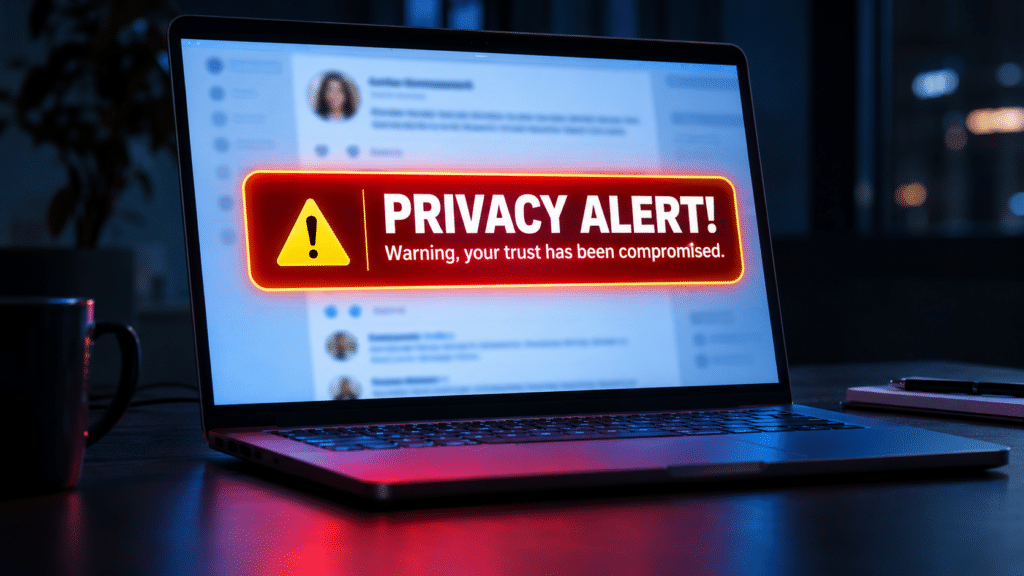
For years, the advice to B2B marketers was to show up, post more and join the conversation. Now the risks behind that advice, from fake profiles to forgotten admin access, are landing on marketing’s desk, and a new book on privacy and social media sets out how to respond.
For 25 years, Luan Wise told B2B marketers what works on social media. Then she co-wrote a book about what it costs.
She is a Chartered Marketer, a Fellow of the Chartered Institute of Marketing and a PhD researcher, and her seventh book, Privacy in the Age of Social Media: Beyond the Like, is written with @Dr Manimuthu Arunmozhi of Aston Business School and published by Routledge in October 2026. This article is based on her recent conversation on the Trust & Influence in B2B podcast. It is not a case for abandoning social media. It is a case for using it differently, and for marketers to lead that change.
When Dr Arunmozhi, who goes by Mani, suggested the book after they both spoke at a TEDx event at Aston University, Luan’s first reaction was doubt. She was known for talking about social media as a force for good, and she remains an optimist about it. Then she looked at what was happening in the world. “Rather than just trying to be the optimist about everything,” she says, “maybe be a bit more realistic and try and understand this.”
Her message is not that marketers should post less. “No, I’m just saying be more responsible,” she says. But the platforms will not do that for you. Luan traces the shift back to the like button, which arrived in 2009 and gave platforms a way to capture data about what people were interested in and who they were engaging with. Today AI-powered algorithms decide what we see, based on our behaviour, and it is no longer a chronological feed of the people we chose to follow. It feels helpful, she says, “but at the same time, we have lost a little bit of control.” If the platforms are steering what your buyers see and collecting the signals they give off, protecting those buyers’ trust falls to the people who show up there on a brand’s behalf. Luan’s view is that marketers sometimes “let the channel of social and digital lead us when we need to step back a little bit.” For years, being involved was the goal. Taking care is now part of the job.
Fake profiles: check before you trust
Privacy can look like an IT problem until it turns up in your own comments. While researching an academic paper on hacking, Luan posted on LinkedIn asking people to share their experiences of hacked accounts. One commenter offered help and linked to a Twitter account. It belonged to a scammer charging people to recover their accounts. The commenter was clearly fake, with an AI-generated profile picture, an incomplete profile and no connections, and was posting the same message under other comments. Three days later it had been removed. “You couldn’t have asked for a better case study,” she says.
Fake recruiter profiles are a related problem. Luan describes them preying on long-term job seekers, asking for national insurance numbers and bank details in return for online consultancy work. LinkedIn is prompting people to verify their identity, which she sees as a personal choice. For her, a long-standing, active profile with a record of networking and commenting is “personally enough verification”.
The lesson is not to distrust everyone. A community feels trustworthy, and scammers rely on that. Before you accept a connection, follow a link or take up an offer of help, look at who is behind it: an empty profile, no history and no mutual connections are warning signs. As Luan puts it, “follow the path and check out the profiles and the backstory.”
What your own posts give away
The same scrutiny applies to other people’s content, and Luan admits it. “I’m one of those people,” she says. “I’m gonna zoom in and see what I can see in backgrounds.” What she finds is mundane and serious at the same time: post-it notes with passwords on the bottom of screens, and confidential documents on desks. “It sounds really obvious, but it does happen.”
Naming the software you use internally is another leak. Luan warns it can hand potential hackers a clue about how to get in through a back door, and she asks whether that detail needs to be shared on a global stage at all, or privately. Competitors can zoom in too. Holiday posts that reveal where you are staying are a personal-safety issue as well. “We’ve got to think about our safety as well,” she says. Luan is not a hacker, she points out, and she can still pull this kind of detail from a photo. Part of the problem is habit, because social has become “almost a really easy habit”: pop a selfie up from the event, and move on.
So before you publish, look at your own images and screenshots as if you were looking for something to exploit. Check the backgrounds, the screens and the desks, and keep details of your internal tools out of public posts.
Who still has the keys
Much of the practical advice is privacy housekeeping, and Luan says password management is “the biggest one”. Many social media managers work through third-party tools and dashboards rather than directly on the platforms, and people who left years ago often still have access to LinkedIn company pages and Meta Business Suite. “This is a really easy way in for hackers,” she says, and it is a risk that businesses would not tolerate elsewhere. “IT wouldn’t let it happen.”
Her fix is not complicated. Run an annual check on your accounts, ask who has access, and remove anyone who should no longer have it. Luan says she loves a checklist, and the book includes digital hygiene checklists for exactly this kind of routine. Luan already uses profile-optimisation checklists in her social media training, so the habit is a familiar one. It is simply being applied to security. The aim is to go back to an internal checklist and process, so that safe practice does not depend on someone remembering at the moment of posting.
The settings you never read
How many people read the terms and conditions when a pop-up appears? “How many of us just tick?” Luan asks. Most of us set up our accounts years ago, never go back and click accept to make the box disappear. But when LinkedIn adds a setting that controls whether your content is used for AI training, she says, “we should pay attention to that.” The same applies to whether you can be tagged or mentioned, and whether your location is switched on. She also asks teams to think twice before uploading images and text to AI tools, and to check they still have permission when they ask people to appear on video.
Reviewing your own privacy settings is the start. The next step is telling colleagues. “Marketers need to have the responsibility to lead it and then share with their colleagues,” Luan says, with a message as simple as, “Could you all switch that one off so that’s in line with our AI policy?” She compares it with the way marketers took the lead when GDPR arrived and everyone reviewed how they collected email addresses. “I hate to say add things to our remit, but we do.”
Why privacy comes down to trust
B2B decisions are big, so buyers look for “referrals, recommendations, familiarity, proof”. Luan sees the same pattern as always: “before digital, it was always about word of mouth. It’s just now at much, much bigger scales.” Social media is where that word of mouth travels, so a privacy failure there damages trust exactly where it counts.
Even so, Luan stays optimistic, because she believes the benefits of social media are real. But she wants marketers to understand the risks before something goes wrong, and her one reframe is to be proactive. “Don’t do your next social media post, go into your account and check the privacy and settings,” she says. It is “that pre-planning for a crisis”.
What to do about privacy
None of this replaces your campaign plan, but each step is small, and together they are the pre-planning for a crisis that Luan recommends.
- Review the privacy and settings on your accounts before your next post, including the LinkedIn setting that controls whether your content is used for AI training.
- Audit who has access to your company pages and connected third-party tools at least once a year, and remove anyone who has left.
- Check the backgrounds, desks and screens in your images before you publish, and keep details of your internal tools out of public posts.
- Look at a profile’s history and mutual connections before you trust a comment, a link or a connection request, because a community feeling is not proof.
- Tell your colleagues when a setting changes, and treat leading that conversation as part of the marketing remit.
Let's connect
Whether you’re looking for a speaker, collaborator, or advisor, I’d love to help you bring fresh perspective to your B2B audience.
Follow me on:


