What is B2B influencer marketing? And what makes it different from B2C?

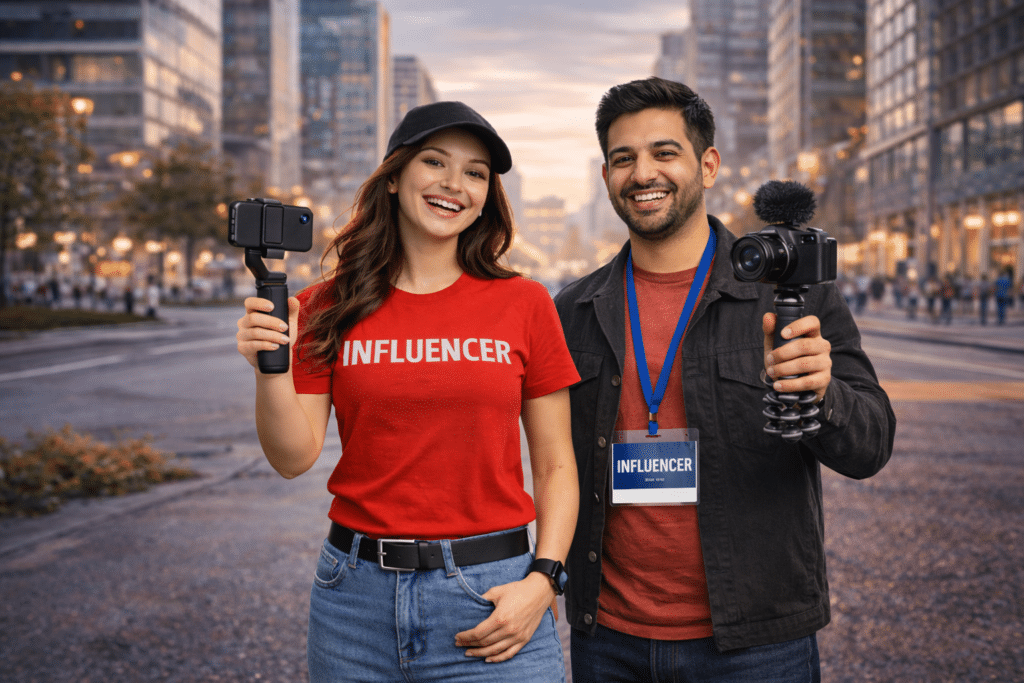
Most B2B marketers know they should be doing influencer marketing. Few know what it actually looks like when it works. A strict analysis of two years of B2B Marketing Awards and Elevation Awards entries — alongside conversations with the practitioners running these programmes — reveals five patterns that distinguish B2B influencer marketing from its consumer cousin, and point to where the discipline is heading next.
Influencer marketing in B2B is one of those disciplines everyone has an opinion on and almost nobody agrees about. Search the entry data from the 2025 B2B Marketing Awards and the word “influencer” appears in well over 130 campaigns. Apply a strict definition — an external individual, not employed by the brand, whose credibility, expertise or audience is deliberately leveraged — and the number collapses to around 35. Most of what gets labelled influencer marketing in B2B isn’t really influencer marketing at all. It’s employee advocacy, buying-committee targeting, a journalist who happens to be a coverage target, or simply a category box ticked on an entry form.
That definitional confusion is the first and most important difference between B2B influencer marketing. In consumer, the discipline is settled. The model is mature: brands partner with social personalities who have large engaged followings to promote products through sponsored content. The economics are familiar, the metrics are familiar, the playbook is mature. B2B has no equivalent settled model. As Kristen Sesto of Custom Influence puts it, influencer marketing in B2B is “not exactly PR, but not exactly performance marketing, not its own channel.” It lacks a settled home within marketing organisations, and most teams are still working out where it belongs, who should own it, and how to measure it.
Yet within the small minority of B2B campaigns doing it properly — roughly 5–6% of awards entries across two years of B2B Marketing Awards and Elevation Awards data — clear and often counterintuitive patterns emerge. And taken together, they describe a discipline that is developing its own distinctly B2B identity, one that frequently inverts the consumer playbook rather than borrowing from it.
Here are the five differences that matter most.
1. Credibility beats reach
The consumer influencer model prizes reach. The B2B data prizes credibility — and the gap between the two is wider than most marketers assume.
The numbers are stark. Wavin’s plumbing influencers drove 16,000 sample pack requests and over £1m in stock orders from a community of 150,000 installers. Chevron’s equipment YouTuber Bryan Furnace generated 2.7 million views at a fraction of the benchmark cost per acquisition. Vodafone’s ethical hacker Dr Katie Paxton-Fear helped deliver £23m in incremental pipeline. Meanwhile, celebrity-fronted B2B campaigns — Samsung partnering with Rochelle Humes and Deliciously Ella, EZRA hosting James Corden — either failed to shortlist or produced softer, less commercially quantifiable results.
The influencer’s value in B2B doesn’t come from how many people follow them. It comes from how closely their audience overlaps with the target buyer. A plumbing influencer whose 50,000 followers are 90% qualified installers delivers a more commercially valuable audience than a business personality with 500,000 followers who happen to include some facilities managers.
“If you’re looking for straight up reach, you can get that from paid ads. And if you want an influencer to deliver reach, you can also boost that content on almost any social platform now.” — Kristen Sesto
Reach is a solved problem. Influencer value sits elsewhere — in the credibility and trust that a genuine practitioner brings to a niche audience.
The practical implication is that influencer selection in B2B looks completely different. It’s not a matter of searching a database by follower count. As Sesto warns: “Finding the right people in planning effectively is the most difficult part of influencer and creator marketing. I think you cannot skip that step of really putting in the groundwork of doing good old-fashioned desk research.” Map who your buyers already trust. Talk to your sales team. Spend time in the communities where your customers congregate. There are no shortcuts.
2. Less control produces better results
The second difference is one many B2B marketers find genuinely uncomfortable. Across the campaigns analysed, the influencer programmes that gave individuals creative freedom — unscripted formats, authentic voice, platform-native delivery — shortlisted at significantly higher rates than those that controlled the output.
Chevron’s Rant Video Series is the clearest illustration. Rather than providing Bryan Furnace with polished scripts and approved messaging, the campaign gave him freedom to deliver content in his natural, unfiltered style — resulting in “rant” videos that mirrored the tone of real industry conversations. Broadcom’s campaign with NetOps expert Jeremy explicitly avoided what they described as “shackling” him with scripts and key message decks. ACCA’s mockumentary films were distributed through comedian Josh Baylis’s own social channels, deliberately designed to be indistinguishable from his organic content.
This cuts directly against deeply ingrained B2B instincts. Brand guidelines, legal review, multi-stakeholder approval chains, neat quotes inserted into press releases — these are the cultural defaults of B2B marketing, and they actively undermine influencer effectiveness. As Sesto observes: “A lot of the teams that we work with are comms teams or PR teams and they have set ways of working… There is a bit of a mindset shift required when you start working with influencers and creators.” The shift she’s describing is recognising that influencer marketing is not PR, and shouldn’t be managed as PR.
“The effectiveness of influencer marketing is because it is not branded content. And I have personally seen that time and time again over the past three years of running campaigns.” — Kristen Sesto
The resolution, visible in the strongest campaigns, is careful selection rather than careful scripting. Choose influencers whose natural voice, values and perspective already align with your brand, then trust them to communicate authentically. The discomfort of ceding control is the price of credibility.
3. The pipeline connection
Conventional wisdom positions influencer marketing as a top-of-funnel awareness play. The 2025 data challenges that directly. Several of the most sophisticated B2B campaigns are routing influencer engagement into demand generation and ABM infrastructure — flagging video viewers in Demandbase, feeding engagement signals into CRM nurture tracks, attributing pipeline to influencer touchpoints.
This is perhaps where the B2B and B2C models diverge most decisively. In consumer, the influencer measurement conversation tends to revolve around impressions, engagement rates and brand lift. In the strongest B2B campaigns, influencer activity is wired into the same commercial infrastructure as everything else.
Vodafone Business attributed £23m in incremental pipeline and a 34% increase in opportunity creation to its influencer-integrated cybersecurity campaign. Fellowes’ WorkLife Coach campaign used its pan-European influencer network to drive engagement that fed directly into CRM-integrated nurture tracks. Broadcom/Modern’s campaign represents the leading edge: influencer video views were tracked at the individual account level through Demandbase, with viewers who watched beyond 50% flagged for precision retargeting. The influencer content wasn’t a standalone initiative — it was a named signal source within account-based infrastructure.
This addresses the discipline’s biggest vulnerability in B2B: proving ROI. When influencer activity exists only at the awareness level, it faces the same budget pressure as any unmeasured brand activity — it feels valuable but is difficult to quantify. When influencer content is connected to pipeline, it becomes measurable in the language that sales and finance teams actually understand.
It also changes how strategy is designed. When the objective is awareness, the primary selection criterion for influencers is reach. When the objective is pipeline, the criteria shift toward audience quality, account overlap, and the ability to drive the kind of engagement — deep views, content interaction, return visits — that signals genuine interest rather than passive consumption.
4. Relationships compound; one-offs don’t
Tracking campaigns across both the 2024 and 2025 awards cycles revealed something striking: several influencer relationships appear in consecutive years, and these sustained partnerships consistently outperform one-off activations.
Chevron and Bryan Furnace is the clearest example. The partnership appeared first in the 2024 Elevation Awards as the Delo Expert Video Series (Shortlisted) and returned in 2025 as the Influencer Rant Video Series (Shortlisted again). The 2025 submission explicitly describes Furnace as “a credible, long-term brand ambassador whose talents extend beyond this series into broader Chevron Lubricants marketing.” Cirkle’s Retailer Inner Cirkle programme for PepsiCo follows the same trajectory — appearing with Extra Flamin’ Hot in 2024 and Doritos Dinamita in 2025, with the influencer group evolving into a standing B2B activation resource rather than a one-off launch tactic.
Repeated collaboration builds familiarity between brand and influencer, refines the content format based on what resonates, and deepens audience trust. The audience comes to associate the influencer with the brand not through a single sponsored post but through sustained, credible association over time. The influencer, in turn, develops genuine knowledge of the product and market that makes their content progressively more authoritative.
There is a useful parallel with long-term sports sponsorships. A one-year sponsorship rarely returns the same value as a three- or five-year commitment, because the cycle of the event and the audience’s recognition only mature over time. Influencer relationships work similarly, with the added advantage that they’re typically far cheaper than tier-one sponsorship deals.
Yet most B2B campaigns still default to campaign-by-campaign thinking — brief an influencer, produce some content, measure the results, move on. Sesto is candid about why: “Brands don’t even have a separate influencer or creator marketing budget, let alone having budget for something that’s new that they’re then going to put all their eggs in one basket into one partner.” It’s expected behaviour for an immature discipline. But the data suggests it leaves significant value on the table. The strongest returns come not from the first activation but from the second, third and fourth — when the relationship has matured, the format has been refined, and the audience has learned to expect and trust the association.
5. Experience generates authenticity in a way scripts can’t
The fifth pattern is the one that most clearly distinguishes B2B influencer marketing from its digital-first consumer cousin. Across the 2025 data, the campaigns generating the strongest engagement and commercial results were those where the content originated from a genuine real-world experience — a factory visit, a trade show, a live demonstration, an on-farm documentary shoot — rather than a studio or a scripted brief.
Wavin invited plumbing influencers to a behind-the-scenes factory experience at their Doncaster headquarters, where they tested the product, filmed reactions and created content in their own style. Capgemini embedded tech influencer Alex Banks in an America’s Cup experience. Zoetis created a multi-season documentary series filmed on real US ranches and dairy farms. Kerrymaid deployed a branded food trailer touring trade shows and customer sites, with chef influencers creating recipe content at live events. McCain surprised a foodservice award winner with a visit from celebrity chef Beau MacMillan.
The consistent element is that the experience generates the authenticity. When an influencer reacts to a product or experience in real time, the authenticity is self-evident in a way that no script can replicate. The context reinforces credibility — a chef influencer surrounded by professional kitchen equipment at a trade show, a tech influencer at a live sporting event where the technology is being applied in competition, a plumber testing fittings on a real production line.
This also explains why the strongest B2B influencer campaigns are naturally multichannel rather than digitally siloed. The experience happens in the physical world. The content that emerges from it lives in the digital world. And the commercial outcome sits in the commercial world — pipeline, leads, orders, relationships. The strongest campaigns connect all three, using the experience as the generative core from which everything else flows.
Sesto adds an important caveat here that’s worth taking seriously. Experience-based campaigns are powerful but they aren’t the only model: “You can also put some really great campaigns together around the idea of what content do we need? Do you need educational carousels? Do you need demos of how to use a software platform? Do you need people launching some research or a white paper with you?” Content-first influencer campaigns absolutely work. The point isn’t that every B2B campaign needs a factory visit. It’s that experiences, where they’re available, produce a quality of authenticity that briefs cannot manufacture.
So what’s actually different?
Step back from the five findings and a coherent picture emerges. B2B influencer marketing is not a smaller, more sober version of the consumer model. It’s a different discipline, with different underlying economics:
- Where consumer prizes reach, B2B prizes resonance within a defined professional community.
- Where consumer is comfortable with scripted brand integration, B2B punishes it — authenticity isn’t a stylistic preference but a commercial requirement.
- Where consumer measurement often stops at awareness and engagement, B2B’s most advanced campaigns connect influencer activity directly to pipeline and revenue.
- Where consumer treats influencers as campaign assets, B2B’s best practitioners are starting to treat them as long-term strategic relationships.
- Where consumer is largely digital-first, B2B’s strongest influencer work is experience-first, with content flowing from real-world events rather than the other way around.
It’s also, to be clear, a discipline still very much in its infancy. With genuine influencer activity present in only 5–6% of awards entries, this is not a mature field. Most B2B organisations have no dedicated influencer budget, no clear owner, and no settled measurement framework. That makes it both risky and unusually full of opportunity. The pool of credible influencers in any B2B niche is small — there are not thousands of cybersecurity influencers competing for brand deals, but a handful of practitioners with genuine authority and engaged followings. The brands that identify and partner with those voices early, and commit to the sustained relationships the data shows compound in value, will lock in a competitive advantage that latecomers will struggle to displace.
Let's connect
Whether you’re looking for a speaker, collaborator, or advisor, I’d love to help you bring fresh perspective to your B2B audience.
Follow me on:


