Finding the perfect niche for B2B influencer marketing in 2026
Influencer marketing is probably the most misunderstood discipline in B2B marketing right now. It’s talked about constantly, yet practised rarely — and when it is practised, it’s often done wrong.
Having spent considerable time analysing hundreds of entries across two major awards programmes — the B2B Marketing Awards in the UK and the Elevation Awards in the US — and applying a strict definition that filters out employee advocacy, customer reference programmes, and buying committee activity that frequently gets mislabelled as influencer marketing, what remains is a small but revealing dataset of campaigns that genuinely qualify. The full findings are being published as a dedicated report, but one thing is already clear: the brands getting real commercial results from influencer marketing are doing it very differently from what most B2B marketers assume.
To help make sense of what that looks like in practice, I was joined on the Trust & Influence in B2B podcast by Kristen Sesto Sesto, founder of Custom Influence, a specialist B2B influencer and creator marketing agency. What follows draws on that conversation and the awards data to set out what good actually looks like — and what it takes to get there.
1. Prioritise credibility over reach — and invest in finding it
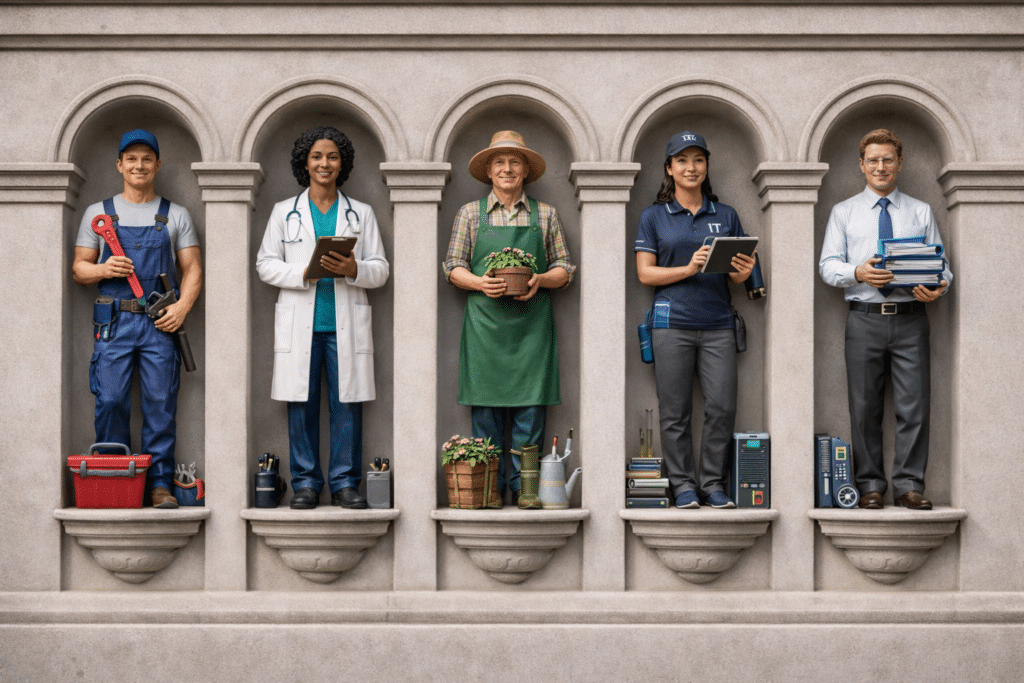
The instinct to seek out influencers with large followings is understandable, but in B2B it’s largely misplaced. The awards data consistently shows that niche trade practitioners with small, specialist followings outperform celebrities and high-reach personalities on the outcomes that matter — pipeline, revenue, commercial impact. Wavin’s plumbing influencers drove over a million pounds in stock orders from a community of 150,000 installers. Vodafone’s ethical hacker Deity Paxton helped deliver £23 million in incremental pipeline. Meanwhile, campaigns built around mainstream celebrity partnerships struggled to demonstrate equivalent commercial returns.

Kristen’s framing is useful here: if reach is what you’re after, paid media is a more reliable and measurable route. “If you’re looking for straight up reach, you can get that from paid ads,” she said. The value of an influencer in B2B lies in something different — the trust and credibility they carry within a specific professional community. That’s what shifts behaviour and drives commercial outcomes.
The practical challenge is that finding these people is genuinely hard, and there are no reliable shortcuts. Influencer marketing platforms exist but are built primarily for consumer use cases. LinkedIn doesn’t currently make it easy to search by influence, engagement rate, or audience composition. Kristen is direct: the planning and sourcing stage is the most difficult part of influencer marketing, and skipping it is not an option. Her recommendation is to start internally — talk to your sales team about who your customers look to for advice online, conduct an influencer mapping exercise, and supplement with desk research. It’s manual work, but it’s foundational.
→ Define the professional communities your buyers belong to and identify the voices those communities genuinely trust. Talk to your sales team, run an influencer mapping exercise, and budget real time for sourcing. This step is most likely to determine whether the campaign succeeds or fails.
2. Choose the right partner, then trust them
One of the most striking findings from the awards analysis is what might be called the control paradox: the more a B2B brand manages and scripts an influencer’s output, the worse it tends to perform. Campaigns that gave influencers genuine creative freedom — unscripted formats, platform-native delivery, authentic voice — shortlisted at significantly higher rates and produced stronger commercial results than those with tighter brand governance. Broadcom’s campaign with a NetOps expert explicitly avoided, in their own words, “shackling him with scripts and key message decks.” Chevron’s Brian Furness was given latitude to deliver content in his natural rant style. ACCA’s mockumentary films through comedian Josh Baylis were deliberately designed to be indistinguishable from his organic content.
Kristen’s explanation gets to the heart of it: “The effectiveness of influencer marketing is because it is not branded content.” The moment it starts to look and feel like branded content, the thing that made it valuable disappears. This is a significant mindset shift for B2B teams accustomed to PR and comms workflows where legal review, brand sign-off, and message control are standard practice. The resolution isn’t to abandon quality standards — it’s to invest that rigour earlier, in the selection process. Find someone whose natural voice already aligns with your brand, agree on the broad territory and objectives, and then give them room to work.
→ Apply your brand standards in the selection process, not the briefing process. Once you’ve found the right partner, brief on outcomes and territory — then let them work in their own voice.

3. Think channel and format before content
A useful discipline Kristen recommends is to begin with the channel rather than the content brief. Different social platforms reward different formats, tones, and creator styles — and the most effective influencer campaigns are those where the content feels native to the platform it lives on. Start by understanding how your brand currently shows up on a given channel organically, identify where the gaps or opportunities are, and then look for influencers whose style and format complement or extend that presence.
This also applies to format decisions. If your brand lacks strong video content, that might be where influencer partnerships can add the most value. If thought leadership on LinkedIn is the priority, the criteria for selecting a creator look very different from a YouTube-first strategy. The point is to let the channel and format logic drive the brief, rather than arriving at influencer selection with a pre-determined content template and trying to find someone to fill it.
→ Before writing a brief, decide which channel you’re activating on and what formats are most effective there. Find influencers who are already performing well in that environment — don’t try to fit a creator to a template that doesn’t suit them.
4. Connect it to your pipeline metrics
The assumption that influencer marketing is inherently a top-of-funnel awareness play is one the awards data actively challenges. Several of the most sophisticated campaigns in the dataset are integrating influencer activity directly into ABM infrastructure — tracking engagement at the account level, using content completion rates as intent signals, and attributing pipeline to influencer touchpoints. Broadcom tracked influencer video completion rates through DemandBase, tagging viewers who watched beyond 50% for precision retargeting within their ABM engine. Vodafone attributed a 34% increase in opportunity creation to its influencer-integrated cybersecurity campaign.
Not every organisation has the martech sophistication to replicate the Broadcom model immediately, and Kristen is honest about that. But the principle is replicable in simpler forms. Boosting influencer content as a paid placement targeted to a defined account list is one accessible starting point. Using third-party tools to analyse LinkedIn engagement by account is another. The key question to ask before any campaign launches is what attribution is technically possible — and then building that into the campaign design from the outset rather than retrofitting measurement after the fact.
→ Before launch, ask your martech team what attribution is technically possible. Even basic account-level tracking or targeted boosting moves influencer activity from an awareness play into something measurable and commercially accountable.
5. Build relationships, not just campaigns
The industry default for influencer marketing remains campaign-by-campaign: brief, produce, measure, move on. But one of the clearest signals in the awards data — visible only because entries were tracked across two consecutive years — is that sustained partnerships consistently outperform one-off activations. Chevron’s relationship with Brian Furness appeared in both the 2024 and 2025 data, shortlisting both times, with the 2025 submission explicitly describing him as “a credible long-term brand ambassador.” PepsiCo’s Circle Retailer Inner Circle programme evolved from a launch tactic to a standing activation resource over the same period.

The parallel with sponsorship is instructive: a single-year sports sponsorship rarely extracts the full value of the relationship, while a multi-year commitment compounds through familiarity, audience trust, and creative depth. Kristen is careful not to suggest that long-term partnerships are the only valid model — with influencer marketing still a relatively new discipline for most organisations, short-term experimental activations remain a legitimate and useful way to build knowledge. But where a partnership is working, extending it is almost always the better strategic choice.
→ If a partnership is delivering results, extend it. Compound value accrues through deepening trust, growing audience familiarity, and increasingly native creative collaboration — none of which a one-off campaign can replicate.
6. Start with experience, not a content brief
Perhaps the most forward-looking signal in the 2025 data is where the best influencer content actually originates. The campaigns generating the strongest engagement and commercial results are consistently those built around genuine experiences — factory visits, live events, on-location shoots, trade show activations — rather than scripted briefs delivered in a studio. Wavin invited plumbing influencers to a behind-the-scenes factory visit at their Doncaster headquarters. Capgemini embedded a tech influencer into an America’s Cup experience. Kerry May deployed a branded food trailer at trade shows with chef influencers creating content live. In each case, the experience generated the authenticity, and the authenticity generated the results.
Kristen’s nuance here is worth holding onto: this doesn’t mean every campaign needs a big experiential centrepiece. Content-led campaigns — educational material, software demonstrations, thought leadership tied to research — can be equally effective without the operational complexity of live events. But the underlying question is a valuable one to ask at the start of any campaign: what genuine experience could we create, rather than what content do we need? It’s a subtle shift in planning logic that tends to produce meaningfully better creative output.
→ Before writing a content brief, ask what genuine experience you could create for your influencer partner. It doesn’t need to be elaborate — but content that originates from a real, immersive moment consistently outperforms content that originates from a brief.
The bigger picture
B2B influencer marketing is developing its own identity — one that looks quite different from the consumer model it’s often assumed to mirror. Credibility matters more than reach. Creative freedom produces better results than brand control. The best content starts with experience. And relationships compound in ways that campaigns don’t. The full data and analysis behind these conclusions will be published shortly as a dedicated report — but the practical principles are available to act on now, regardless of where your organisation is in its influencer marketing journey.
As Kristen put it at the close of our conversation: “It’s a lot more personal and manual.” That’s not a limitation — it’s a feature. In a marketing landscape increasingly dominated by automated, AI-generated, interchangeable content, the human credibility at the heart of influencer marketing is precisely what gives it its edge.